What Can Cause a Ruptured Eardrum?
Nov 11, 2026
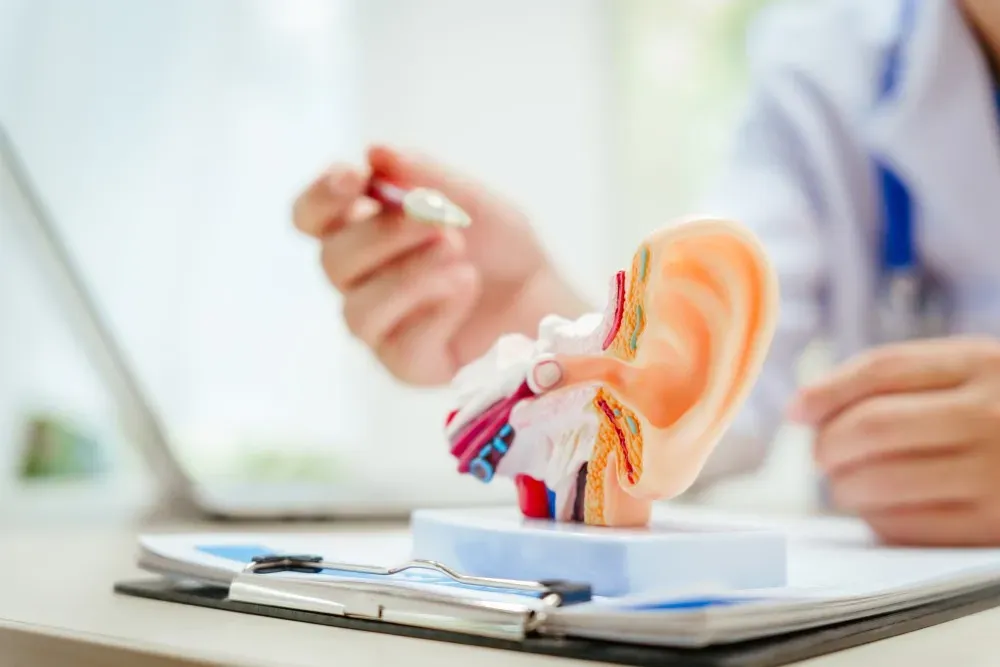
A tiny membrane sits between your outer and middle ear, protecting the most sensitive parts of your ear from the outside world. But that tympanic membrane, your eardrum, isn’t impervious to damage. It can experience a small tear. That torn membrane is better known as a ruptured eardrum.
Signs of this issue include ear pain that comes on suddenly but also fades quickly, fluid coming from the ear, ringing in the ear, hearing loss, and vertigo. If that sounds familiar, you might be dealing with a ruptured eardrum.
Come see Raj Bhayani, MD, and our team at New York Institute of Otolaryngology and Aesthetic Surgery. At our offices in Brooklyn, Queens, and the Bronx, we help both kids and adults who have suffered a tear to their tympanic membrane. With same-week appointments, we can give your ear the attention it needs fast.
Understanding what caused the tear is an important first step toward protecting your hearing and finding relief.
Infection is the leading cause of ruptured eardrums. When you or your child get an infection in the middle ear (otitis media), the resulting pressure can be enough to tear the thin tympanic membrane.
Sudden changes or dramatic swings in air pressure can also rupture your eardrum. This can happen during air travel or scuba diving, or when something hits your ear hard.
Acoustic trauma, or damage from excessively loud sounds, can rupture the eardrum, although that’s fairly rare.
Finally, you can rupture your eardrum yourself if you stick something in your ear. That’s why medical professionals recommend against using cotton swabs or anything else solid to clean your ears.
Here’s the good news: A ruptured eardrum usually heals on its own in a few weeks. If the tear is large enough, we might recommend an in-office paper patch (myringoplasty) or an outpatient procedure to repair the membrane with tissue from your own body (tympanoplasty).
While your ruptured eardrum heals, keep the ear dry and avoid blowing your nose. This can cause a pressure differential in your ear that strains your tympanic membrane.
To prevent a future eardrum issue, we recommend:
Never stick something solid, even a cotton swab, into your ear. Teach your kids the importance of keeping things out of their ears, too.
If you think you or your child might have a ruptured eardrum, come see Dr. Bhayani. Contact us to schedule an appointment at our office in Brooklyn, Queens, or the Bronx today.